Universe25 - Review: Richard Melkonian Explores Time, Faith, and the Strange Burden of Being Human

Shot on 16mm film, this ambitious debut feature blends surrealist cinema, psychological horror, science fiction, and existential philosophy into one wonderfully peculiar experience.
Editor's Note: Mild spoilers ahead. This review discusses aspects of the film's narrative, characters, and philosophical themes while preserving its major revelations and ending.
By Seth Metoyer | More Horror
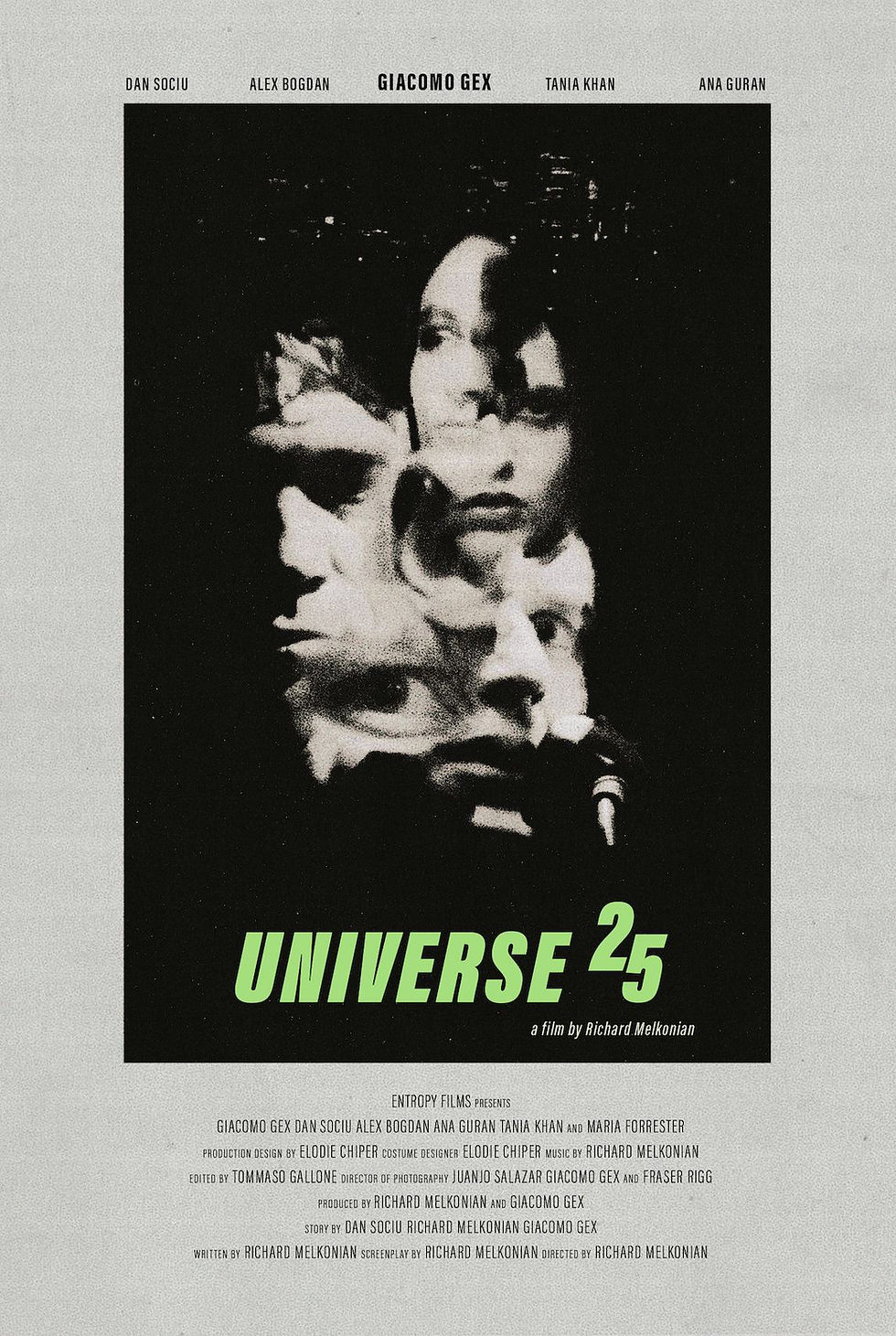
Every so often, I come across an independent film that reminds me why I enjoy discovering filmmakers with their own peculiar creative vision. Richard Melkonian's Universe25 is one of those films. It's strange, beautifully photographed, philosophical, occasionally disturbing, and filled with ideas that stayed with me long after the credits rolled. There were moments when I found myself thinking about David Lynch, Christopher Nolan's Memento, and even Ingmar Bergman. That's an interesting collection of filmmakers to have wandering around inside your head while watching someone's debut feature.
As someone who has spent a considerable amount of time thinking and writing about philosophy, theology, consciousness, technology, and our complicated relationship with time, I found plenty to chew on here. Melkonian explores many of these subjects through a story that moves between religious mythology, science fiction, psychological uncertainty, and existential drama. There's a wonderfully disjointed quality to the filmmaking that gradually draws you into its peculiar world. By the time the story approached its conclusion, I was genuinely on tenterhooks.
What impressed me most was how confidently Melkonian approached such ambitious material. This is a filmmaker with a clear appreciation for cinema as an art form, and he seems perfectly comfortable allowing his audience to wander through some rather strange philosophical territory.
An Angel From the Future and the End of the World
A young postal worker, played by Jacob Meadows, discovers a mysterious letter while sorting through undeliverable mail. The letter contains an account written by someone claiming to be a fallen angel from the future named Mott, played by Giacomo Gex.
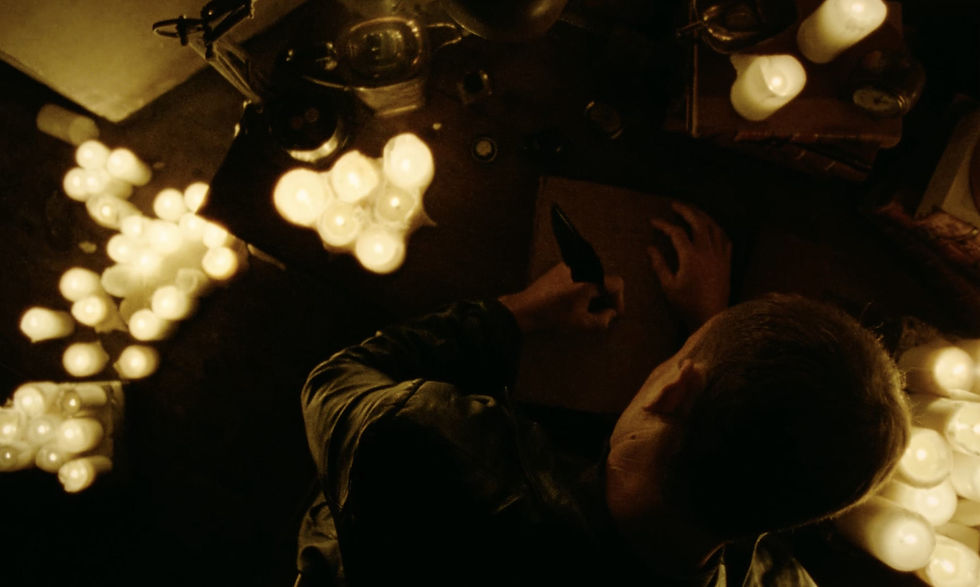
Mott has arrived on Earth with three instructions from an unknown master. Before the next Sabbath, when the world will supposedly end, he must locate a saint unaware of his own holiness, find a sacrificial lamb and offer its blood, and write a scroll documenting everything he witnesses.
His journey takes him through London and Bucharest, where he encounters an assortment of characters whose lives become entangled with his increasingly confusing mission. Along the way, Mott begins questioning his purpose, his identity, and the authority responsible for sending him into this world.
What initially presents itself as a supernatural story grows increasingly complicated when we learn more about Mott's origins. His account includes advanced computing, quantum technology, transportation across time, and a future in which humanity has merged with machines. Suddenly, the concept of an angel takes on an entirely different meaning.
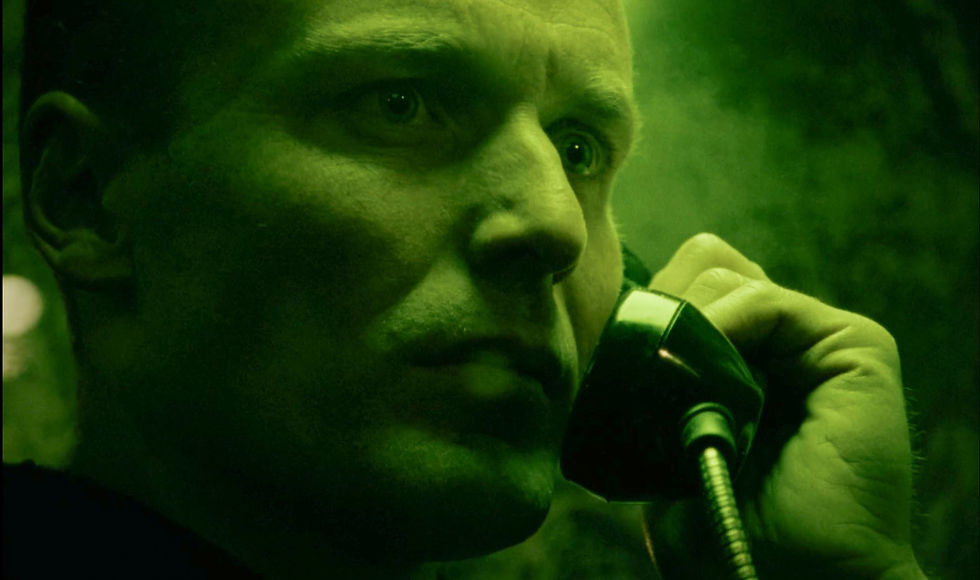
I really enjoyed how Melkonian places futuristic technology alongside ancient religious symbolism. We have biblical prophecy, divine instructions, and sacrificial imagery existing in the same universe as quantum computers and artificial intelligence. There's something wonderfully absurd about a supposedly celestial messenger receiving instructions through telephone calls while wandering through contemporary cities.
The story also introduces an interesting mystery concerning the reliability of its narrator. How much of Mott's account can we accept? What exactly is he, and does he fully understand his own existence? The film invites us to consider these questions as the narrative becomes increasingly fragmented.
Lynch, Memento, and a Touch of Bergman
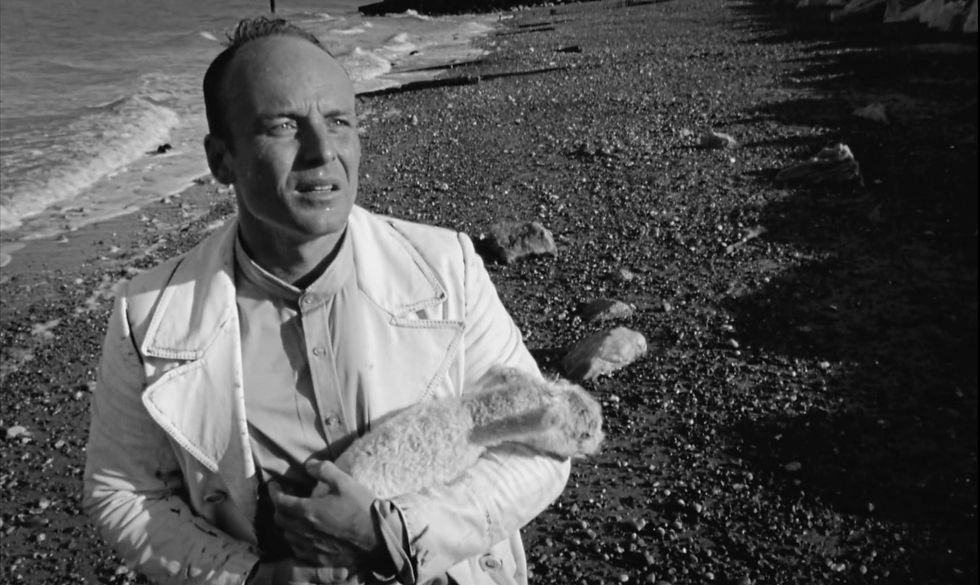
One of the first things that struck me about Universe25 was how good it looks. Shot on 16mm Kodak film, the movie possesses a distinctive visual quality that complements its unconventional storytelling. Cinematographer Juanjo L. Salazar and Melkonian create imagery that feels tactile, atmospheric, and occasionally dreamlike. The film moves between color and black-and-white photography, giving certain sequences an almost timeless quality.
I've always appreciated filmmakers who understand that the camera can communicate ideas and emotions beyond what's happening in the dialogue. Melkonian clearly shares that appreciation. His visual approach frequently reinforces the uncertainty surrounding Mott's journey, creating the sensation that we're observing events through a perspective we may never fully understand.
David Lynch came to mind during several sequences, particularly in the way ordinary conversations and locations gradually become uncomfortable or surreal. There's a familiar strangeness to some of these encounters that reminded me of Lynch's willingness to let reality become increasingly unstable.
I also picked up some Memento vibes, particularly in the film's treatment of identity, chronology, and the unreliability of personal experience. Christopher Nolan's film explores the relationship between memory and our understanding of reality, and while Universe25 approaches those subjects differently, I found myself making connections between the two.
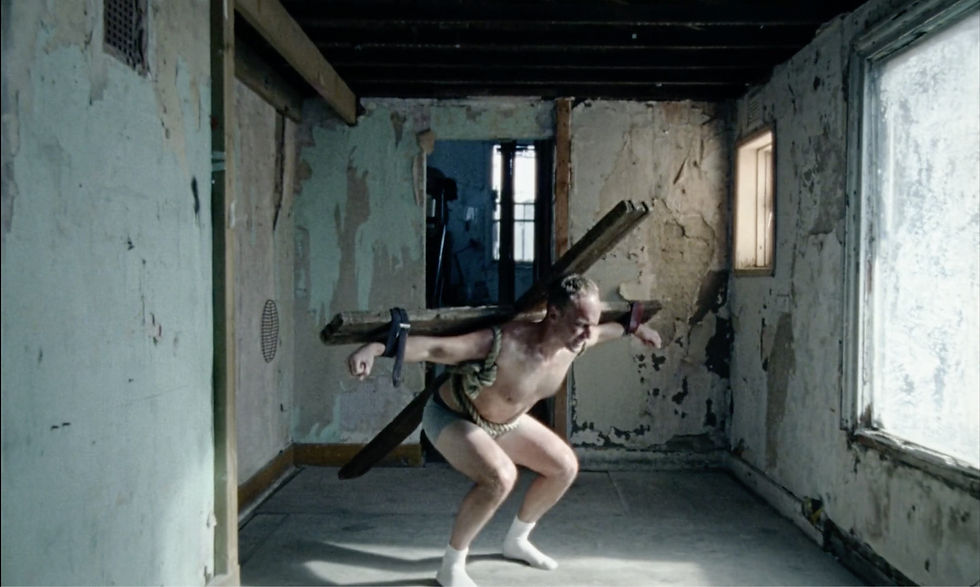
There was also a black-and-white sequence that reminded me of some of Ingmar Bergman's work. Its visual atmosphere carried that stark, contemplative quality I associate with his cinema, particularly his exploration of mortality and religious uncertainty. Given the theological themes running through Universe25, that association felt especially appropriate.
These are my own cinematic reference points rather than an attempt to place Melkonian's work neatly alongside those filmmakers. What I appreciate is that he seems interested in exploring the expressive possibilities of cinema, and that enthusiasm comes through in the finished film.
Time, Consciousness, and the Question of Identity
The philosophical territory is where Universe25 became especially interesting to me. I've long been fascinated by the nature of time, particularly the distinction between time as something we measure and time as something we actually experience. Memory, consciousness, and personal identity all complicate our understanding of what it means to exist within time.
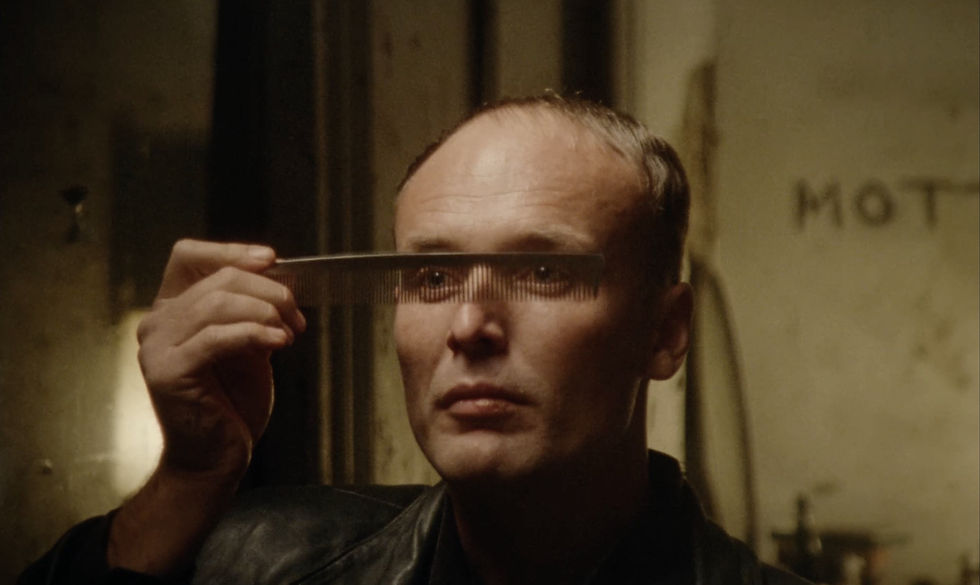
Early in the film, Mott discusses his origins as a hyperintelligence from a technologically advanced future. He explains that he can exist under different identities, including Mott and Tom, comparing this apparent contradiction to a quantum bit capable of occupying multiple states.
That concept immediately opens the door to philosophical questions concerning identity and continuity. If our personalities, memories, and consciousness can change or potentially exist independently of our biological bodies, what actually makes us who we are?
Philosopher Derek Parfit explored related questions concerning personal identity, psychological continuity, and survival. His work challenges the assumption that identity necessarily represents something permanent and indivisible. Mott's shifting understanding of himself makes that philosophical territory particularly relevant.
I also found myself thinking about Henri Bergson, whose philosophy distinguished between measurable, spatialized time and what he called duration, our lived experience of time as a continuous flow shaped by consciousness and memory.
There's something fascinating about applying those ideas to a character who claims to exist beyond the ordinary human experience of time yet struggles to understand what it means to live within it. Melkonian's fragmented storytelling reinforces that uncertainty, creating an experience where chronology and personal perception become increasingly unstable.
The film also raises questions about determinism and free will. Mott believes he must fulfill instructions from an authority that created him, yet his encounters with humanity begin to challenge his sense of purpose. His predicament forces us to consider whether a being designed to obey can eventually develop the capacity to choose its own existence.
Those questions become even more compelling when we consider the film's relationship with artificial intelligence.
Artificial Intelligence and Humanity's Obsession With Immortality
One of the more intriguing aspects of Universe25 is its exploration of humanity's relationship with technology. Mott describes a future where human beings have merged with machines, radically transforming the biological limitations that once defined their existence.
The film also includes a conversation about biotechnology companies, wealthy investors, and the pursuit of extending human life. The discussion touches on Silicon Valley's fascination with longevity and the possibility that technological advancement could eventually allow humanity to overcome some of its most fundamental biological limitations.
These ideas connect naturally with transhumanism, a philosophical and technological movement concerned with enhancing human capabilities through scientific advancement.
Thinkers such as Nick Bostrom have examined the possible futures of technologically transformed humanity, along with the philosophical implications of those transformations.
What I found particularly interesting is the contradiction at the heart of Mott's experience.
Here we have a technologically advanced being who possesses something resembling immortality, yet he becomes increasingly fascinated by the very human experiences that his future civilization has apparently moved beyond.
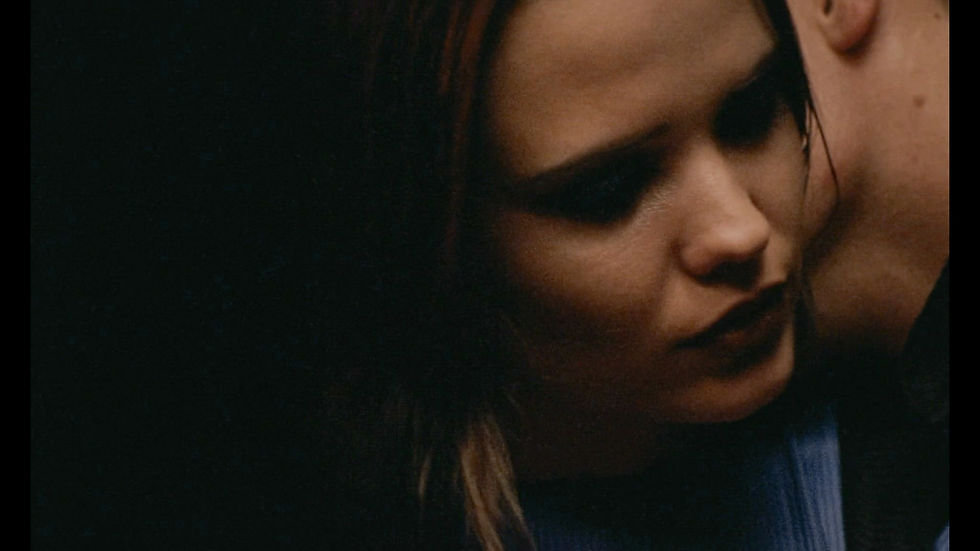
At one point, Mott observes two people kissing and struggles to comprehend what he's witnessing. In his world, technological advancement has fundamentally altered reproduction and human relationships. This simple encounter becomes something extraordinary to him.
He begins wondering about love, intimacy, and whether another person could ever feel affection toward him. These questions gradually become more important to his existence than the cosmic mission he originally received.
I love this aspect of the story because it introduces an interesting paradox. Humanity continues pursuing technologies that promise to extend life and transcend biological limitations, while Mott begins longing for the messy, emotionally complicated experience of being human.
It also raises a question worth considering: If we could eliminate mortality and radically transform our biological existence, how might that change our understanding of love, desire, relationships, and the meaning we attach to our limited time here?
Melkonian gives us an unusual science-fiction premise through which to contemplate some very contemporary concerns.
Religion, Gnosticism, and the Problem of Divine Authority
The religious symbolism in Universe25 goes well beyond its references to angels and biblical prophecy. Throughout the story, Mott wrestles with questions about his creator, the nature of holiness, and his obligation to fulfill instructions whose ultimate purpose remains unclear.
During one particularly revealing passage, he explains that he must obey his master because that master created him and programmed him to follow orders. That statement caught my attention.
There's a fascinating theological problem embedded in the relationship between a creator and a being whose existence depends upon that creator's authority. Does obedience constitute genuine faith when the individual has no meaningful choice? And what happens when a created being begins questioning the instructions governing its existence?
These questions reminded me of Søren Kierkegaard, particularly his exploration of faith, anxiety, and the individual's relationship with divine authority. Kierkegaard recognized the profound existential tension involved in confronting religious questions that exceed ordinary rational certainty.
I also found myself considering certain themes associated with Gnostic thought. Various ancient Gnostic traditions explored distinctions between the highest divine reality and lesser creative or governing powers, sometimes portraying humanity as existing within a world whose apparent authority conceals a deeper spiritual problem.
I'm certainly not suggesting that Universe25 presents a specifically Gnostic theology, but Mott's struggle with his creator, his confusion about the nature of his mission, and his desire for another form of existence invite that kind of interpretation.
The film also makes interesting use of traditional Christian imagery. References to Moses, sacrificial offerings, sainthood, and the Book of Revelation appear throughout the dialogue.
Yet these concepts frequently emerge through characters whose behavior complicates conventional assumptions about holiness.
At one point, Mott discovers that someone he believes to be a saint may possess considerably less admirable qualities than expected. The resulting confusion creates some darkly humorous moments while raising a worthwhile question about how we define goodness.
I appreciated the willingness to explore these ideas through imperfect characters and morally complicated situations. There are moments when the film seems almost playful in its handling of sacred imagery, and others when the existential implications become genuinely unsettling.
Universe 25 and the Psychology of Collapse
The film's title also carries an interesting historical reference. During one conversation, a character discusses Universe 25, the famous experiment conducted by American researcher John B. Calhoun involving the behavior of mice living within a controlled environment.
Calhoun's experiment began in 1968 and examined population growth and behavioral changes in a colony provided with abundant resources and protected from predators. Despite those favorable conditions, the population eventually experienced severe social disruption and reproductive collapse.
The experiment subsequently became a popular cultural metaphor for the dangers of social deterioration, overcrowding, and the breakdown of communal behavior. Researchers and commentators have debated the extent to which its findings offer meaningful parallels to human societies.
Melkonian incorporates the experiment into a story already concerned with humanity's potential extinction, the consequences of technological advancement, and the fragile structures governing civilization.
It's an interesting thematic connection, particularly when we consider the film's portrayal of characters struggling with isolation, damaged relationships, and uncertainty about their place in the world.
The psychological aspects of Universe25 also deserve attention. One character discusses schizophrenia and his family's experiences with hallucinations, introducing another layer of ambiguity to Mott's supernatural claims.
Throughout the film, characters experience confusion, emotional distress, and profound uncertainty about their own lives. Mott himself eventually struggles to reconcile his shifting identities and the increasingly contradictory nature of his experiences.
These elements add to the psychological horror of the story. Melkonian creates an atmosphere where the audience must continually reconsider what they're witnessing, allowing questions about reality and perception to become part of the overall experience.
Strong Performances and a Remarkable Musical Identity
A film this unusual needs convincing performances, and fortunately, Universe25 delivers. Giacomo Gex is excellent as Mott, bringing a compelling mixture of confusion, determination, curiosity, and vulnerability to the character.
What I particularly enjoyed about his performance was how he handled Mott's gradual fascination with humanity. There's something simultaneously amusing and moving about watching a being who claims extraordinary knowledge struggle to understand relatively ordinary human emotions and interactions.
The supporting cast also contributes considerably to the film's strange atmosphere. Dan Sociu, Tania Khan, Jacob Meadows, and the other performers help establish a world populated by people whose lives seem to exist somewhere between the mundane and the surreal.
The acting throughout is top-notch, and I appreciated how naturally the performers navigate material that could easily become overly theatrical in less capable hands. Even during some of the film's stranger moments, the performances provide a sense of authenticity that helps ground the experience.
Another element that deserves considerable recognition is the musical score.
Melkonian is also the film's composer, and his background in classical music becomes an important part of the production's identity. As someone who works in film music and sound design, I'm always interested in how composers approach the relationship between sound, image, and emotion.
The score here is excellent. Melkonian wrote the music for a string quartet, giving the film an expressive musical dimension that complements its visual atmosphere and psychological tension.
After reading his production notes, I found it particularly interesting that he considers Universe25 a musical drama. He describes music, imagery, and rhythm as central elements of his original creative vision, with the narrative and characters developing around those initial artistic impulses.
That approach makes considerable sense after watching the finished film. The music feels integral to the overall experience, reinforcing the emotional and philosophical dimensions of the story.
Melkonian also reveals that he discarded his original musical sketches and composed the completed score during an intensive four-week period. It's a fascinating detail that speaks to his willingness to let the project evolve creatively.
The marriage of music, image, and performance gives Universe25 much of its distinctive identity, and I think it's one of the film's strongest achievements.
An Unconventional Journey From Script to Screen
There's an equally interesting story behind the production itself. Melkonian developed Universe25 over several years, beginning filming in November 2021 and shooting the final scene in February 2024.
Rather than working from a completed screenplay, he wrote and developed material throughout production, allowing previously filmed scenes to influence the direction of the story. His approach drew inspiration from documentary filmmaking, devised theater, and filmmakers such as Mike Leigh and Wong Kar Wai.
Melkonian also describes his interest in polystylism, drawing inspiration from composers Luciano Berio and Alfred Schnittke, along with poet Fernando Pessoa. The concept involves combining and manipulating different artistic styles, allowing contrasting forms and approaches to coexist within a single work.
Knowing this provides some useful context for the finished film. Its shifting tone and unconventional structure reflect a creative process that encouraged experimentation and discovery.
Melkonian is an Armenian-British composer and director whose work spans classical music, opera, theater, film, and performance art. He studied at the Guildhall School of Music & Drama and has developed projects across multiple artistic disciplines.
Universe25 marks his feature directorial debut, and the film made its world premiere at the 2025 Slamdance Film Festival, where it received a Grand Jury Prize nomination.
It's an impressive introduction to his feature filmmaking career, especially considering the ambition of the material and the unconventional methods involved in bringing it to the screen.
Final Thoughts: What Does It Mean to Be Human?
By the time Universe25 approached its conclusion, I was thoroughly invested. The ending had me on tenterhooks, and I appreciated how Melkonian managed to sustain genuine tension within a story so deeply concerned with philosophical questions and unconventional storytelling.
The film gives viewers plenty to contemplate. There are questions about consciousness, identity, artificial intelligence, religious authority, mortality, and the strange ways human beings attempt to make sense of their existence. Some of these ideas invite multiple interpretations, and I suspect different viewers will take away very different things from the experience.
For me, one of the most compelling aspects of Universe25 is Mott's growing desire to experience humanity. His fascination with love, emotional connection, and the limitations of physical existence becomes increasingly poignant when placed alongside the film's exploration of technological immortality.
I've spent quite a bit of time contemplating our relationship with time and the peculiar way consciousness seems to bind past experiences, present awareness, and imagined futures together. I found those concerns echoed throughout Mott's journey. His struggle with identity and his desire to understand what it means to truly live provided some of the film's most interesting material.
And beyond the philosophical rabbit holes, there's simply a great deal of filmmaking talent on display here. The cinematography is beautiful, the performances are excellent, the musical score adds another expressive layer, and Melkonian demonstrates an adventurous approach to visual storytelling.
I genuinely dug this film.
Universe25 will likely appeal most strongly to viewers who appreciate experimental cinema, philosophical science fiction, surreal storytelling, and psychological horror that allows its unsettling ideas to develop gradually. Fans of filmmakers such as David Lynch and Ingmar Bergman may recognize some familiar artistic territory, while the film's technological and existential themes give it a character of its own.
Richard Melkonian has delivered an ambitious, intellectually engaging, and visually striking debut feature. I'm curious to see what he explores next, particularly if he continues approaching cinema with this level of artistic freedom.
More Horror Verdict: Universe25 is a wonderfully strange and thought-provoking journey through technology, theology, mortality, and human consciousness. With excellent performances, beautiful 16mm cinematography, and a memorable classical score, Richard Melkonian's debut feature offers plenty for adventurous viewers to explore.
About Universe25
Film: Universe25
Writer, Director & Composer: Richard Melkonian
Starring: Giacomo Gex, Dan Sociu, Tania Khan, Jacob Meadows, Alex Bogdan, Ana-Maria Guran, Maria Forrester
Cinematography: Juanjo L. Salazar
Production Design & Costume Design: Elodie Chiper
Editor: Tomasso Gallone
Sound Design: Srdjan Krupjel
Runtime: 84 minutes
Countries of Production: United Kingdom / Romania
Format: 16mm Kodak film, color and black-and-white
World Premiere: Slamdance Film Festival, 2025
Production: Entropy Films