Search Results
Search this site
137 results found with an empty search
- John Carpenter Goes Heavy With Cathedral, a New Horror Album and Graphic Novel
By Seth Metoyer, MoreHorrorMovies.com - John Carpenter has spent decades shaping horror through a combination of stark imagery, relentless atmosphere and unmistakable music. Now the filmmaker and composer behind Halloween, The Thing and Prince of Darkness has returned with Cathedral, an original project that combines a graphic novel with a full-length companion album. That's the closest we'll come to a new horror film at the moment. Both are available now. The project grew from a vivid dream Carpenter had in 2024 involving an abandoned church in downtown Los Angeles and a descent into something far darker beneath it. The graphic novel follows Lieutenant Christine Marks and detectives Paul Hernandez and Steve Mayfield after the killing of a police officer draws attention to a long forgotten cathedral. Their investigation leads them into the building’s catacombs and toward a centuries-old evil imprisoned below. Carpenter devel0ped the story with his wife and longtime creative partner Sandy King and writer Sean Sobczak. Federico De Luca and Luis Guaragna handled the artwork, with Sian Mandrake on colors and Marshall Dillon on lettering. Storm King Comics published the graphic novel. Carpenter Turns Up the Volume The musical half of Cathedral comes from John Carpenter, Cody Carpenter and Daniel Davies, the trio behind much of Carpenter’s recent recorded work. This time, the sound gets heavier. Being a metalhead, as well as a guitarist, I really dug the guitar work on this. Carpenter has described Cathedral as “kind of our first heavy metal album,” pushing his familiar synth-driven style into darker and more aggressive territory. The album contains 14 tracks, with each piece corresponding to a section of the graphic novel. The structure turns the record into more than a standalone soundtrack. Readers can follow the book while moving through the album and experience the story with Carpenter’s score unfolding alongside it. The connection between the music and imagery becomes especially interesting on Spotify. The visualizer accompanying the track “Revenge” features a bloodied, pale-faced figure with black hair and darkened eyes. For horror fans familiar with Carpenter’s most famous creation, the image carries an immediate visual echo of Michael Myers. From the John Carpenter track "Revenge" on Spotify. However, The figure appears to belong to Cathedral’s own mythology rather than the Halloween continuity, but the resemblance creates an intriguing bridge between Carpenter’s past and his latest work. Nearly five decades after the blank white mask of Halloween became one of horror cinema’s most recognizable images, the visual language still resonates with horror fans. From Halloween to Cathedral Carpenter’s music has always functioned as a major part of his storytelling. His minimalist score for 1978’s Halloween became nearly as recognizable as Michael Myers himself. A few repeating piano notes could announce The Shape before audiences ever saw him move across the screen. Cathedral extends that relationship between sound and imagery into another medium. Instead of scoring a completed film, Carpenter and his collaborators built music around a graphic narrative. The result lets readers effectively create the pacing themselves: turn the page, follow the corresponding track and allow the score to provide the atmosphere. The story also enters territory that should feel familiar to fans of Prince of Darkness. An ominous Los Angeles church, religious imagery, hidden catacombs and an ancient evil lurking beneath the surface all place Cathedral firmly within Carpenter’s particular brand of apocalyptic horror. The project functions somewhere between an album, a graphic n0vel and an imagined film. For longtime Carpenter fans still hoping to see him return behind the camera, Cathedral offers another route into that world. The visuals live on the page, the score offers up the tenson, and the rest plays out inside the reader’s head. John Carpenter’s Cathedral graphic novel is available through Storm King Comics. The accompanying album by John Carpenter, Cody Carpenter and Daniel Davies is available through Sacred Bones Records and on all streamin and digital platforms.
- Spider One’s Meta-Slasher ‘Big Baby’ Heads to Tubi FrightFest London
MoreHorrorMovies.com - Spider One is bringing a new masked killer to the screen with Big Baby, a meta-slasher set to make its UK premiere at Tubi FrightFest London on August 27. Written and directed by Spider One, frontman of industrial metal band Powerman 5000, the film also counts Cher (Moonstruck) among its executive producers. Big Baby follows a writer whose nightmares about a maniac killer wearing a baby mask inspire his latest screenplay. As his life begins to unravel, however, the murderous figure at the center of his story starts looking considerably less fictional. The film stars Brandon Scott (Descendent), Krsy Fox (Little Bites), Adam Marcinowski (Bury the Bride), Catherine Corcoran (Terrifier), Chaz Bono (American Horror Story) and David Howard Thornton, best known to horror audiences as Art the Clown in the Terrifier franchise. Lightbulb Film Distribution will release Big Baby in the UK on Digital, DVD and Blu-ray September 7, following its FrightFest premiere. With Spider One behind the camera, Thornton among the cast, and a killer stalking the boundary between a writer’s imagination and reality, Big Baby looks primed to bring some strange new nightmare fuel to the slasher aisle. Synopsis: Nightmares of a maniac killer in a baby mask inspire a writer’s new script. But as his life begins to spiral out of control, he discovers Big Baby’s murderous rampage may be more than fiction.
- Official Trailer for HATE THYSELF Drops Before Release
Studio Dome Unveils Official Trailer for HATE THYSELF Before September 1 Release MoreHorrorMovies.com - Studio Dome has released the official trailer for HATE THYSELF, a psychological thriller directed by Shivaan Makker, featuring Oscar Torre (The Haves and the Have Nots) alongside the late horror icon Tony Todd (Candyman). The film is set for digital release in the United States and Canada on September 1, 2026. Combining the suspense of a serial killer investigation with a chilling psychological journey, HATE THYSELF follows Detective Angelo Matteo (Oscar Torre), a devout investigator whose steadfast faith is challenged when he and his partner, Rufus, are tasked with capturing a sadistic killer targeting young men. As the number of victims grows, Angelo is pulled into a disturbing realm where the boundary between justice and obsession blurs. Haunted by the crimes' savagery, Angelo's hunt for the murderer stirs up long-suppressed personal demons, endangering his marriage, sobriety, and ultimately his moral compass. As the investigation progresses, the pursuit of a serial killer transforms into a compelling exploration of guilt, faith, trauma, and the darkness that can engulf even the most virtuous individuals. The screenplay is penned by Sullivan McGuffin. The film also features Happy Anderson, Corin Nemec, Deborah Rennard, Danforth Comins, Vincent Banks, Gary Brunner, Evan Daigle, and Christina Urias. Partially inspired by the heinous acts of real-life serial killer Robert Berdella, HATE THYSELF delves into the psychological toll of facing unimaginable evil while presenting a suspenseful, character-focused thriller. "This film explores what occurs when someone who views the world in black and white is compelled to face the gray areas of human nature," said director Shivaan Makker. "We aimed to narrate a story that isn't solely about apprehending a killer, but about the emotional and spiritual impact that evil has on those who dedicate their lives to combating it." "Shivaan has created a captivating psychological thriller that extends beyond the conventional crime procedural," said David Josh Lawrence, Acquisitions at Studio Dome. "HATE THYSELF is an intense, thought-provoking film that challenges viewers while providing genuine suspense, and we're thrilled to present it to audiences this September." HATE THYSELF will be available in select theaters and on digital platforms starting September 1, 2026.
- Obsession (2026) Review: Believe the Hype—Inde Navarrette Is the Real Deal
By Seth Metoyer, MoreHorrorMovies.com - Every time an independent horror film explodes across the internet, two competing emotions rise inside me. First, I feel genuine excitement. I have spent a substantial part of the past 15 years producing more than 20 independent films and composing music for several others. I know how difficult it is to get one of these things made, much less convince the world to stop scrolling long enough to watch it. Then comes a small, admittedly petty flicker of jealousy. Every independent filmmaker dreams of watching something they helped create break through the concrete ceiling separating “promising little horror movie” from full-blown cultural phenomenon. Curry Barker’s Obsession punched through that ceiling like somebody had made a wish on a cursed tree branch. Made for around $1 million, the film has earned more than $400 million worldwide, becoming the highest-grossing film in Focus Features history (at the time of this post). After finally watching it, I understand why audiences showed up. The Story Baron “Bear” Bailey, played by Michael Johnston, works at a music store alongside his longtime friend Nikki Freeman, played by Inde Navarrette. Bear wants their friendship to become something more. Nikki clearly does not share that desire. After Bear fails to express his feelings, he purchases a novelty-store object called a One Wish Willow. The small branch promises to grant one wish when broken. Bear wishes that Nikki would love him more than anyone else in the world. The wish works. Enter the nightmare. Nikki suddenly adores Bear with an intensity that initially appears flattering. Her affection soon becomes suffocating, unnatural and increasingly violent. Bear receives exactly what he requested, stripped of every romantic illusion he attached to it. Written, directed and edited by Curry Barker, Obsession stars Michael Johnston as Bear, Inde Navarrette as Nikki, Cooper Tomlinson as their friend Ian, Megan Lawless as Sarah and Andy Richter as music-store owner Carter Harper. Going In With a Chip on My Shoulder I approached Obsession the way I approach most heavily hyped films: partially expecting disappointment. Movies rarely survive the weight of their own publicity. Once the internet starts declaring something “the scariest film of the decade” or announcing that an actor has delivered a generation-defining performance, expectations grow fangs. The film eventually arrives dragging a thousand TikTok reactions behind it. I had repeatedly heard that Inde Navarrette delivered an incredible performance. People say that every year. Occasionally, someone such as Anya Taylor-Joy, Florence Pugh or Lily-Rose Depp actually appears and earns the coronation. Could Obsession really give us another kick-ass young actress with that elusive, impossible-to-manufacture “it” factor? Yes. It could. I also avoided the trailer. Modern trailers frequently operate like three-minute Wikipedia summaries with dramatic music. Social media still leaked pieces of the film into my orbit, especially Nikki’s already-famous “No, no, no, no, no” breakdown. That gave me another small chip to carry into the movie. Betty Gabriel had already turned the words “no, no, no....no, no...” into pure psychological terror in Jordan Peele’s Get Out back in 2017. Barker was around 17 when Get Out arrived, so he had graduated from elementary school, though probably still had homework. Whether his scene intentionally nods toward Peele’s film remains unclear. That comparison disappeared quickly for me as Navarrette claims the m0ment as her own, and Obsession establishes its identity long before that particulr scene arrives. The Horror of the “Nice Guy” The premise sounds almost aggressively simple. Dude wants girl. Girl likes dude as a friend. Dude discovers magic stick. Dude forces girl to love him. The title Obsession also lands somewhere between perfectly accurate and painfully generic. Searching for it online feels like wandering through a video-store shelf filled with erotic thrillers from 1987. Fatal Attraction comes to mind. Yet Barker finds something sharp inside that familiar setup. Bear belongs to the lineage of the rightly named “nice guy”; the man who treats kindness like an investment account. He listens, waits, offers emotional support and quietly assumes that these actions will eventually earn him romance. Dr. Robert A. Glover, author of No More Mr. Nice Guy, calls this kind of arrangement a covert contract. One person performs favors while expecting an unstated reward from someone who never agreed to the terms. When the imagined payment never arrives, affection curdles into resentment. Bear’s wish represents the ultimate covert contract. He eliminates Nikki’s ability to reject the deal. The film posits that coerced love remains coercion, even when it arrives wrapped in awkwardness, insecurity and apparent vulnerability. Bear may look harmless. His desire still overrides Nikki’s autonomy. The One Wish Willow simply transforms an emotional impulse into supernatural law. A particularly revealing scene involves the “real” Nikki asking something of Bear. She never confesses that she secretly wanted him. She never retroactively validates his fantasy. His response reveals the transactional machinery beneath his wounded puppy routine. In that moment, Bear becomes brutally honest without realizing it. He wanted Nikki’s love on his terms. Her actual inner life barely entered the equation. Real Nikki, Wish Nikki and Freaky Nikki Navarrette makes the entire film work. She effectively plays several fractured versions of the same woman: the authentic Nikki, the artificially devoted Nikki and the feral creature fans have dubbed “Freaky Nikki.” Each version shares the same face while carrying an entirely different psychological temperature. Her physical performance sells the transformation. The fixed smiles, sudden movements, emotional ruptures and unnerving stillness all suggest that something has crawled behind Nikki’s eyes and started operating her body through unfamiliar controls. Navarrette never treats the character as a one-note “crazy girlfriend.” She preserves a buried sense of violation beneath the madness. Somewhere inside this romantic automaton, the real Nikki remains trapped beneath Bear’s wish. That makes the performance horrifying and strangely tragic. Navarrette possesses tremendous confidence in her craft. She commits completely, physically and emotionally, without looking like she wants the audience to applaud the effort. She simply becomes the thing the scene requires. The Academy rarely invites horror performances into its marble temple unless prestige drama arrives wearing a monster mask. Navarrette deserves serious consideration. Whether Hollywood recognizes her remains another question. Her work already carries the authority of a breakthrough. Johnston also deserves credit. He keeps Bear human enough for the story to remain complicated. For a while, we feel sorry for him. Then the movie gradually removes the soft lighting from his behavior and reveals the entitlement underneath. The supporting cast performs well across the board, particularly Cooper Tomlinson and Megan Lawless. Andy Richter (yes, that Andy Richter) brings welcome some humor in without turning the film into a joke. Small Spaces, Huge Impact Obsession uses relatively few locations and keeps its physical world compact. That limitation strengthened the film for me. Made it feel claustrophobic. A good thing. Independent filmmakers often believe scale creates legitimacy. More locations, more extras, more effects and more spectacle supposedly make a movie feel “real.” A strong story creates scale inside the viewer’s head. Barker gets this. He focuses on character, escalation, sound, timing and performance. Barker came from sketch comedy through the YouTube channel “that’s a bad idea,” and his comic background clearly sharpened his control over rhythm. Comedy and horror both depend upon tension, timing and involuntary audience reactions. Barker knows exactly how long to hold a moment before twisting it. The film also demonstrates something people outside independent production rarely appreciate: finding actors who can truly carry a movie remains incredibly difficult. A clever premise can get a film financed. Performances make people care. Barker found the right people. That may explain why Obsession connected so powerfully with me and 0thers. The movie has a sharp focus, with every department seemingly tuned to the same wavelength. While the central idea isn’t revolutionary, the execution creates that rare spark where familiar elements suddenly feel vibrant and alive. Believe the Hype Obsession lived up to the hype. The film stayed with me for days, which remains one of my most reliable measurements of success. Plenty of technically impressive movies evaporate before the credits finish. This one keeps crawling around inside your thoughts. Was it groundbreaking? No. The cursed-wish story reaches back through The Monkey’s Paw and countless variations of the ancient warning to choose our desires carefully. Barker himself has cited W.W. Jacobs’ story and a Simpsons monkey’s-paw episode among the film’s inspirations. Obsession does something more valuable than inventing an entirely new mythology. It finds a live cultural nerve inside an old one. The film turns the “friend zone,” romantic entitlement and obsessive attachment into supernatural body horror. Bear thinks he wants perfect devotion. Perfect devotion destroys the person he claims to love. That concept clicked with audiences. The performances clicked. Barker’s direction clicked. Occasionally, all the pieces of an independent film lock together with the satisfying finality of a trap closing. Fans recognized it. I recognized it. Independent horror has produced several of these moments lately, and I am absolutely here for it; even when the producer inside me watches the box-office numbers with a tiny green demon perched on his shoulder. Will There Be an Obsession 2? Barker has confirmed that he has an idea for Obsession 2, though he has no intention of rushing directly into it. He has also discussed turning the One Wish Willow concept into an anthology, with each story following a different wish spiraling out of control. Michael Johnston has clarified that no sequel currently has a formal plan. An anthology could offer the stronger route. The One Wish Willow contains enough mythological potential to become horror’s answer to The Twilight Zone: ordinary people making ordinary wishes and discovering the infernal precision of literal fulfillment. Whatever Barker does next, I’ll be watching. For now, here’s to Real Nikki, Wish Nikki and Freaky Nikki. I salute all three of you. Rating: 4 out of 5 bloody wishbones
- SLASHERCISE Review: Feel the Burn—and Then the Blade
By Seth Metoyer, MoreHorrorMovies.com - If you grew up during the 198os, you probably remember encountering a very specific kind of late-night television fever dream. You would flip through the channels looking for some gloriously cheesy horror movie on USA Up All Night, only to stumble across women in brightly colored leotards bending, stretching and sweating to generic pop music. Neon leg warmers glowed against black studio floors. Synthesizers pulsed. Everyone smiled with the unsettling enthusiasm of someone trapped inside a fitness cult. Those were the days. Written and directed by Ama Lea, Slashercise resurrects that peculiar corner of VHS-era culture and drenches it in stage blood. The result plays like an aerobics tape discovered in the back room of a condemned video store; a tape that someone probably should have left buried. The film follows Meathead, a masked killer stalking fitness clubs across Los Angeles and turning workout sessions into elaborate crime scenes. As instructors begin dropping faster than exhausted gym members after leg day, a group of fitness fanatics must fight back before Meathead adds them to his body count. That kind of makes Slashercise sound like a conventional slasher movie, but the actual film takes a much stranger route. For a substantial portion of the runtime, Slashercise operates as a genuine retro workout video led by Vanessa Decker (horror.vixen on Instagram). At first, I struggled to understand where the movie intended to take me. The exercise sequences continue long enough to feel like a separate production attached to the narrative feature. Then the film shifts gears and introduces its loose slasher plot, connecting the two halves in a deliberately peculiar fashion. Once I understood the concept, everything clicked. The workout section actually works as a workout video. Viewers can follow along, sweat through the routine and presumably exercise a few demons in the process. I should probably try it myself, though the bone spurs in my hips and left knee may require a gentler approach. It's hard out there these days being an ’80s kid in 2026. Anyone still several decades away from this particular chapter of the human experience should trust me: it becomes a brutal ride. Decker carries the film with the natural charisma of someone completely comfortable commanding both a camera and an exercise class. She sells the movements, the jokes and the absurdity without stepping outside the strange little universe the film creates. She could probably convince Laurie Strode to finish one more set of crunches. Then we have Meathead (hilarious name btw). Meathead represents everything terrible about gym culture compressed into one ridiculous slasher villain. He is arrogant, obnoxious and hilariously committed to his own mythology. Watching him receive his inevitable punishment brings a particular kind of satisfaction. Every gym has had some variation of this guy wandering around, occupying three machines while offering unsolicited advice. Slashercise simply gives him a mask and follows the concept to its bloodiest conclusion. The production wears its low budget like a sweatband. Ama Lea fills the screen with neon lighting, synth music, slick practical gore and an atmosphere inspired by the horror aisle of an old neighborhood video store. The movie realizes the visual grammar of 1980s fitness tapes: exaggerated enthusiasm, artificial smiles, relentless repetition and bodies presented like products under fluorescent light. The supporting cast and cameos strengthen the film’s connection to horror culture. Sarah Nicklin remains someone I enjoy seeing in anything, and the ensemble includes familiar genre faces such as Sarah French, Kelli Maroney, Felissa Rose, Tiffany Shepis, Lisa Wilcox, Diana Prince and John Bloom—better known to horror fans as Joe Bob Briggs. Joe Bob appears as a gym janitor, and he fits the role with alarming ease. Perhaps he missed his calling. Cinema gained an essential drive-in critic, though some alternate universe probably contains the cleanest and most sarcastically maintained fitness club in Los Angeles. The cameos also create a bridge between the VHS culture Slashercise celebrates and the modern horror community that continues keeping that culture alive. This movie belongs to the same spiritual bloodline as the low-budget films once shown on USA Up All Night or TNT’s MonsterVision: odd, playful movies that understood entertainment could thrive without prestige, solemnity or restraint. Slashercise never aims for an intricate mystery or a deeply layered mythology. The plot provides enough c0nnective tissue to move between workouts, murders, jokes and cameos. The film succeeds through personality, atmosphere and commitment to its absurd premise. The unusual structure may initially confuse viewers expecting Meathead to start carving through the cast within the opening minutes. Once the film reveals its actual rhythm, the lengthy exercise material becomes part of the joke, part of the experiment and part of the experience. This is a slasher movie you can literally work out to. Feel the evil burn. Ultimately, Slashercise delivers a fun slice of horror comedy that viewers can actively exercise along with or leave running in the background during a gathering. It feels like something discovered after midnight in 1988, sandwiched between an aerobics infomercial and a heavily edited slasher movie hosted by someone making jokes from a trailer park. Grab the leg warmers. Stretch carefully. Keep an eye on the mirrors. Meathead may already be standing behind you. Slashercise premiered exclusively on BloodStream on July 1, 2026, and will expand to additional platforms beginning October 1, 2026. Follow Seth Metoyer on Instagram at @sethmetoyer and follow More Horror at @morehorror for more horror news, reviews, interviews and independent film coverage.
- DEATHWOODS Brings Old-School Slasher Carnage to Theater Before Screambox Debut
MoreHorrorMovies.com - You’ll bring a sleeping bag — but you’ll leave in a body bag. Fans of practical gore and classic slasher films have another blood-soaked title to add to their watchlist. Deathwoods, an upcoming independent horror film from Dark Dreams Productions, Simpatico Pictures, and Doctor Horror, draws inspiration from cult favorites like The Burning, Madman, and Pieces, delivering a modern slasher built around practical effects, brutal kills, and backwoods terror. The film will make its world premiere on August 7, 2026, at 7:00 p.m. at Tara Atlanta (2345 Cheshire Bridge NE, Atlanta, Georgia) before heading to Screambox later this summer, as well as digital and streaming. Get tickets to the theatrical screening here. Set in the forests surrounding Old Hickory, Tennessee, Deathwoods follows Scott, who joins friends on a camping trip after a painful breakup. What begins as a chance to move forward quickly spirals into a fight for survival as an old local legend emerges from the shadows. One by one, the group falls victim to the terrifying force said to haunt the woods. The film's mythology traces back twenty years to the murder-suicide of the Wallace family. Stories of a grotesquely mutated child survived long after the tragedy itself, growing into an urban legend that Scott and his friends soon discover carries a horrifying truth. Deathwoods was created by writer and executive producer Scott Conner and co-directed by Jake Kopronica (Purgatory Station, Int. Hallway/Night) and Deryk Wehrley (Crust, Watchdog, Zombieland: Double Tap). Kopronica also co-wrote, produced, and appears in the film, while Wehrley handled the special effects makeup. Cinematographer Jaren J. Lewis (Crust, Watchdog, Deadly Endings) brings the film's gritty visual style to life. The ensemble cast features horror icon Felissa Rose (Sleepaway Camp, Terrifier 2, Victor Crowley), LC Holt (You're Next, V/H/S 2), KateLynn E. Newberry (Juror #2), Jessa Jupiter Flux (Murdercise), Celeste Blandon, and introduces Miles Dimitri Baker of Ice Nine Kills in his acting debut alongside Anthony Dain, Kellan Jackson, and MacKenzie Lee. Tickets for the world premiere are currently available through Dark Dreams Productions. Horror fans looking for a throwback slasher packed with practical gore and old-school atmosphere will want to keep Deathwoods on their radar when it arrives on Screambox later this summer.
- 'PARALYSIS' Releases on Digital and On Demand
MoreHorrorMovies.com - PARALYSIS, an action horror film by Uncork'd Entertainment, is now available on Digital and On Demand. Directed by and starring Louis Mandylor from the My Big Fat Greek Wedding franchise, the film presents a gritty narrative of revenge and justice against the backdrop of a city threatened by a deadly designer drug. A nurse, secretly in love with a respected doctor, seeks vengeance after learning of his family's brutal murder. She targets the gang responsible, using their own drug, "Paralysis," to incapacitate them and exact her chilling revenge. PARALYSIS features Michael Copon (One Tree Hill, Power Rangers Time Force), Peter Dobson (Forrest Gump), and Louis Mandylor. The screenplay is by Niko Foster and Sophia Louisa.
- ‘Ice Cream Man’ Review: Eli Roth’s Summer Treat Melts Before It Reaches the Finish Line
By Seth Metoyer, MoreHorrorMovies.com - *This review contains spoilers. Proceed with caution. Eli Roth’s Ice Cream Man opens with a Little League baseball game, and for several minutes, I thought the movie had discovered the perfect doorway into its particular brand of summertime horror. The kids argue, posture and perform the ancient rituals of the neighborhood ball field. There are nerds, bullies, swaggering players and young coaches already practicing the authoritarian confidence they will someday bring to homeowners’ association meetings. Even the umpire looks like a kid who happens to be two years older than everyone else and has managed to grow a scraggly mustache and a few ambitious strands of chin hair. At one point, he throws his arms out and yells, “SAFE! SAFE! SAFE!” toward both dugouts and seemingly half the surrounding county. It made me cackle outloud. I remembered those games from my own childhood in the 1980s, when several teams would play across the same dusty complex and an absent umpire could result in one of the older kids getting recruited to call a younger game. I loved The Bad News Bears. I also loved horror movies. Plenty of Gen-X kids did. We could spend the afternoon arguing over a strike zone and the evening watching something claw its way out of a grave. The opening realizes the ecosystem beautifully. It captures how childhood summers once felt endless, unsupervised and slightly dangerous even before the monster arrived. The creepy ice cream truck rolls into town. The truck looks great. So does Ari Millen as the Ice Cream Man, a clammy, socially malformed figure who resembles the kind of neighborhood eccentric every kid instinctively watches from the opposite side of the street. The production gives him the right vehicle, the right wardrobe and the right unnerving presence. He looks as though someone left the town nerd inside a freezer for twenty years and thawed him out with several major grievances intact. The premise also t0uts the uncomplicated appeal of a playground urban legend. Children eat the Ice Cream Man’s frozen treats and become homicidal, blue-lipped zombies; or possessed sugar fiends, depending on how precisely one wants to diagnose the condition. The town quickly fills with pint-sized killers, nervous parents and enough improvised carnage to make the local summer recreation department reconsider its liability coverage. Roth clearly understands the joke. Childhood innocence becomes the weapon and that soothing melody of the ice cream truck becomes a dinner bell for murder. It moves forward like The Children filtered through The Bad News Bears, with a helping of Freddy Krueger mythology scooped on top. The flick also comes with the built-in expectation attached to Roth’s name. This is the filmmaker behind Cabin Fever, Hostel and The Green Inferno, movies that knew how to convert bodily destruction into an entire cinematic philosophy. Even when Roth’s films divided audiences, they usually displayed a sharp commitment to their own madness. Ice Cream Man feels strangely casual by comparison. The cinematography, sound design and general presentation often feel like an extremely low-budget production. I have produced more than twenty independent features, so I recognize that texture immediately. Wonder if that was on purpose? You learn to spot the hastily dressed room, the thin ambience, the coverage designed to get everyone home before overtime and the scene that technically works while still feeling one careful pass away from truly landing. A family dinner sequence featuring Roth in a small role especially locked the film into that B-movie register for me. The modest approach may represent a deliberate attempt to recreate the bargain-bin horror aesthetic of an earlier era. Either way, the finished result frequently resembles one of the regional horror productions Roth’s name once promised to elevate. The kills provide intermittent fun. The practical effects deliver several gooey sights worthy of the premise, and Roth remains fluent in the visual grammar of splatter. The problem lies in the staging surrounding those effects. Several deaths feel rushed, loosely blocked or presented with so little dramatic pressure that the gore becomes the entire sentence rather than its exclamation point. A severed body part can get a reaction. A well-constructed scene makes us anticipate it, dread it and laugh when the movie finally drops it into our lap. The film’s central stretch also tests the limits of its concept. For nearly an hour, children roam through town in a murderous trance. They attack adults, force-feed ice cream to other kids and shuffle from one set piece to the next like a zombie outbreak sponsored by Baskin-Robbins. To me, this would have made excellent material for a vicious 20- or 30-minute short. At 86 minutes, it begins to feel like a short film wearing a feature-length trench coat. Even thought Ice Cream Man never lacks activity (people screaming, children attacking, cones dripping, bodies dropping...etc.), yet movement and momentum remain different cinematic substances. The movie keeps moving while the story waits for its final act to arrive. The mythology eventually becomes more interesting than the rampage. A necromancer offers a falsely accused ice cream man the chance to punish the parents who once blamed him for horrific crimes. The arrangement carries an unmistakable whiff of Elm Street: a wronged monster, guilty adults and children inheriting the blood debt of the previous generation. A preacher explains how the surviving kids can stop the Ice Cream Man. The ritual requires them to dig up a grave, remove a head without looking directly at it and present it to their tormentor. The sequence plays like a suburban-horror riff on Medusa’s decapitation from Clash of the Titans. It also gives the kids something more compelling to do than stumble through another attack scene. Most of the plan works. Then the severed head reveals one last surprise, a plot twist that actually provides the movie’s strongest moment. I will preserve it here, since the reveal deserves to reach viewers intact. It introduces a clever final wrinkle into the revenge plot and briefly delivers the wicked storybook energy the rest of the film keeps reaching toward. For a few minutes, Ice Cream Man feels like a campfire tale told by the one kid whose older brother owns an R-rated VHS collection. The young cast handles the material well. Child actors can flatten horror when their performances feel overly polished or directed toward cuteness. These kids generally behave like recognizable kids: brave until they panic, cruel when the group allows it and capable of accepting supernatural instructions with the practical urgency of completing a scavenger hunt. The film’s early baseball scenes reveal what Roth might have built around them. There is something rich in the collision between childhood nostalgia and childhood savagery. Anyone who remembers neighborhood games also remembers the social hierarchies, miniature tyrants, wounded pride and casual brutality that existed beneath the sunshine. The Ice Cream Man turns the knob for the viewer but lets the creaking drag on for too long. I wanted more escalation, texture and precision from a filmmaker with Roth’s instincts. I wanted the town to feel alive before it descended into madness, the Ice Cream Man himself to command more of the film rather than functioning largely as the distributor of its supernatural problem. I wanted the murders to build toward something beyond the accumulating body count. Perhaps Roth made the film as a tribute to the movies and memories that shaped him: neighborhood summers, disreputable VHS horror and the glorious moment when adults stopped paying attention. He has reportedly carried the idea for years, and that personal attachment makes sense. The m0vie mostly feels like a story someone dreamed up as a horror-obsessed kid and finally gained the resources to shoot as an adult. I think his affection reaches the screen, but so does the thinness of the original idea. There are some bloody kills, a creepy villain, a final jolt, and enough sticky practical gore to satisfy viewers looking for a late-summer horror diversion. The opening made me remember why childhood and horror have always belonged together. The rest just left me wondering why such a simple treat required this much time to serve. Ice Cream Man promises an unhinged summer sugar rush. What arrives feels closer to a cone forgotten on the sidewalk: brightly colored, briefly tempting, yet already melting under the heat.
- Shudder's 'The Creep Tapes' Returns September 15 with Two-Episode Season Three Premiere
MoreHorrorMovies.com - Shudder has officially announced the return of its acclaimed found-footage anthology series The Creep Tapes. The third season premieres Tuesday, September 15, with the first two episodes debuting exclusively on Shudder and AMC+. The six-episode season continues the unsettling world created by writers and executive producers Mark Duplass and Patrick Brice, the duo behind the Creep film franchise. Season three welcomes an impressive lineup of guest stars, including Kate Siegel (Carrie), Nic Hamilton (IT), Elliott Fulham (Terrifier 2, Terrifier 3), and Ora Duplass (Coven Academy), who appears in a throwback-themed episode. The series once again opens the vault of disturbing videotapes left behind by one of horror's most socially awkward—and deadliest—serial killers, portrayed by Mark Duplass. Each episode follows a new victim who unknowingly crosses paths with the enigmatic killer, discovering far too late that an ordinary encounter has become a deadly game. Following the two-episode premiere on September 15, Shudder will release two new episodes each week through September 29. Patrick Brice directs all six episodes while also serving as co-writer alongside Duplass. The series is produced by Duplass Brothers Productions and Shudder, with executive producers Mel Eslyn, Jay Duplass, Chris Donlon, and co-executive producer Shuli Harel. John Baker serves as producer. Season Three Episode Guide Episode 301 – "Crystal" (Premieres September 15) A washed-up rock star attempts to revive his career by producing a scandalous video. Guest Stars: Kate Siegel, Benjamin Kasulke Episode 302 – "Mo" (Premieres September 15) A New Yorker finds himself relentlessly pursued across all five boroughs by an unwanted admirer. Guest Stars: James Earl, Chris Gethard, Annie Henk, John Baker Episode 303 – "Anisha" (Premieres September 22) A journalist boards a private jet hoping to land a career-defining interview with a mysterious businessman. Guest Stars: Rekha Shankar, Jeffrey Self, Jeff Barnett, David Nordstrom Episode 304 – "Nobody" (Premieres September 22) A cryptic encounter explores the idea that sometimes there is only one wolf within. Episode 305 – "Greg" (Premieres September 29) Greg discovers someone has secretly been living inside his apartment for nearly a week. Guest Star: Nic Hamilton Episode 306 – "Jody + Brie" (Premieres September 29) A quiet night between friends takes a disturbing turn when a mysterious newcomer arrives. Guest Stars: Ora Duplass, Elliott Fulham Season three promises another collection of uncomfortable encounters, psychological manipulation, and slow-burning dread that has made The Creep Tapes one of Shudder's standout original horror series. Fans of the Creep films should have plenty to look forward to when the series returns this September.
- Frankie, Maniac Woman Review: Body Horror, Grindhouse Fury, and the Violence of Being Seen
By Seth Metoyer, MoreHorrorMovies.com - Spoiler Warning: This review discusses major plot developments, character deaths, and the ending of Frankie, Maniac Woman. Frankie, Maniac Woman opens with murder and a handful of sand thrown across a body in the Hollywood Hills. That tells you almost everything you need to know about the film’s personality. The bubble rising from the masked killer’s mouth adds a flash of playful indifference. The sand feels theatrical, ritualistic, and oddly personal. Small details like these turn a familiar slasher setup into something more distinctive and immediately announce director Pierre Tsigaridis’ commitment to the film’s visual language. From there, the story begins constructing the psychological machinery behind the violence. Dina Silva stars as Francis “Frankie” Ramirez, an aspiring singer-songwriter navigating Los Angeles, a city that often treats beauty like currency and humiliation like background noise. At the gym, Frankie gets reprimanded for failing to wipe down a machine. A bouncer refuses to let her into her own gig while allowing women from a so-called “fuckable list” inside. Her bandmate comments on how she smells after working out. A venue owner reminds her about the weight she was expected to lose. Each encounter adds another cut. When Frankie finally reaches the stage, she stumbles through her introduction while voices inside her head belittle her. Her private torment soon manifests through binge eating, purging, obsessive viewing of fat-removal procedures, and a disturbing attempt to perform liposuction on herself. The film presents body shame as a psychological meat grinder. Frankie hears the world’s cruelty so frequently that it eventually begins speaking in her own voice. Hollywood Eats Its Own Frankie’s desperation leads her back into the Hollywood Hills, where she attempts to hang herself from a tree. The branch breaks while her phone rings with news about job opportunities connected to diversity in music. She tosses the phone. Among the trees, she senses someone watching her. A mysterious man appears and seems to tell her that he has come to conjure the Devil. His dialogue sits low enough in the mix that I had to replay the scene several times. The screener I had didn't have closed captions, which made a few quieter exchanges difficult to follow. I mention this mostly for viewers who rely on captions or simply prefer them for dialogue-heavy films. The dialogue occasionally sinks far into the mix, although the film’s broader soundscape fares much better. The stranger soon becomes Frankie’s companion, tormentor, accomplice, or fractured psychological projection. He may represent supernatural influence, psychosis, trauma, rage, or the accumulated voice of every insult Frankie has absorbed. Whatever he represents, he gives form to the ugliest part of her inner life. Frankie Finds Her Face One of the film’s strongest early sequences involves a woman Frankie knows from the gym. A predatory man with an unsettling Ted Bundy resemblance corners her and behaves as though she owes him attention. Frankie later visits the dude's apartment and gets pulled inside where he attempts to overpower and abuse her. She fights back with ferocious intensity, seemingly prepared for the moment from the moment she knocked on his door. The demonic figure appears and urges her toward murder. Frankie responds by brutally beating the man. The special effects deliver exactly what gore fans want. The violence looks ugly, wet, painful, and disturbingly convincing. I have never considered myself a gorehound, although I can recognize effective gore when filmmakers commit to it. Frankie, Maniac Woman commits. The film shifts between color and black-and-white, giving the story a fractured grindhouse rhythm. The monochrome imagery recalls exploitation cinema, William Lustig’s Maniac, and the genre remixing associated with Quentin Tarantino. These shifts also make Frankie’s world feel unstable, as though she keeps crossing between lived reality and a horror film playing inside her head. When Frankie visits the w0man from the gym to tell her that she won't have to worry about creepster-gym-guy again, the encounter turns awkward, darkly funny, and eventually deadly. The woman calls Frankie creepy and compares her to Jeffrey Dahmer. Frankie replies that she sees herself as more of a Ted Bundy type (funny that I mentioned Bundy earlier), creating a sly callback to the predatory man from the previous sequence. The mysterious figure reappears in the kitchen, and a knife enters the equation. The woman attempts to fight back. It does not work out for her. A Maniac Is Born By the film’s second phase, Frankie has embraced the mask. Flashbacks reveal the women she has killed while a love ballad plays over the carnage. The music choice works beautifully. Romantic music paired with brutal imagery creates a kind of cinematic blasphemy. The sweetness makes the violence feel colder. It also reinforces the film’s affection for grindhouse filmmaking, where innocence and depravity often share the same soundtrack. The film jumps forward one year where six murders have occurred, according to the Los Angelas news reports. Frankie now keeps a severed head in her refrigerator, licks the legs of corpses, and lives inside a fully developed nightmare. She also receives the opportunity she has always wanted: a meeting with a major music producer. Frankie performs one of her songs, and she sounds genuinely good. The producer praises her writing and voice. Then he condescendingly explains that audiences will find her appearance disgusting and he already has a "hot" artist prepared to record Frankie’s songs. The scene delivers the film’s central thesis with the force of a guitar amplifier dropped down a staircase. The industry values Frankie’s talent while rejecting Frankie herself, as it wants the art while treating the artist as a marketing problem. Frankie responds by smashing the producer with a guitar; subtlety is long gone. Having spent a couple of decades in the music industry as both an artist and a producer, I can totally relate to her in this scene. Haha. Echoes of Maniac and The Shining Flashbacks reveal Frankie as a child witnessing her mother having sex with another man. Her mother looks directly at her and continues. The sequence strongly recalls Maniac and supplies another layer of sexual trauma, shame, and maternal abandonment. Later, Frankie hacks through a door with a knife in a scene that evokes the domestic terror of The Shining. These references feel woven into the film’s DNA rather than pasted on top of it. Tsigaridis builds a collage from several generations of horror while maintaining a distinct identity for Frankie’s story. The performances also hold the film together. The supporting cast understands the heightened tone, while Silva gives Frankie enough emotional weight to keep the character from becoming a simple cartoon killer. One victim even fights back and stabs her. “I’ve never been stabbed before,” Frankie says. “I kind of like it.” It is a funny line, and Silva lands it perfectly. The Final Round After arguing with the figure haunting her on a desert road, Frankie attempts to kill him with a rock. She is actually smashing herself in the head. That image literalizes the film’s entire psychological framework where every violent command ultimately turns back toward Frankie. A group of women find her and bring her to a house with a p0ol. They offer food, talk about beauty, and give her a makeover involving bright pink and black feathers. The environment initially feels welcoming, yet the same body-policing language that has followed Frankie through the film soon creeps back into the room. The women discuss pizza, weight, and obesity. Frankie spits out her food in shame. A mushroom party intensify the night, and she spirals into a hallucinatory breakdown. By morning, humiliation has hardened into rage. The women reject her attempt to join them outside and tell her to take a shower. Memories of them laughing at her mushroom crashout the night before flood back. The mysterious figure appears again and urges her to kill. Frankie puts on the mask and the feathered “princess” costume. The final round begins. She hunts the women through the house and kills them one by one. One surviving woman listens to a voice message from an abusive boyfriend who criticizes her for eating pizza after seeing photos on social media. Frankie recognizes something familiar in that cruelty and allows her to live. That moment gives Frankie a final spark of emotional recognition. She sees another woman trapped beneath the same machinery of judgment and shame. The mercy costs Frankie dearly. The woman runs from the house with a machete, and kills Frankie, apologizing while explaining that she can't allow her to murder anyone else. The ending gives the slasher formula an interesting twist. The final girl survives because the killer sees herself in her. She then fulfills the role the genre demands and stops the monster. At least temporarily. Music, Murder, and One Last Breath The music throughout Frankie, Maniac Woman deserves special attention. As a film composer, I pay close attention to how directors use score and song placement. Here, the music receives enough presence in the mix to function as part of the storytelling. The love ballad playing over the murder montage creates one of the film’s most memorable tonal collisions. The original score also supports Frankie’s unraveling without disappearing beneath the dialogue and effects. The songs strengthen Frankie’s identity as a musician whose artistic ability exceeds the industry’s willingness to accept her appearance. Silva also proves herself a strong vocalist, which gives the producer sequence real credibility. Frankie sounds talented because Silva genuinely sounds talented. The film closes with a grindhouse-style musical flourish and a bold “THE END” title. Then the camera returns to Frankie. She breathes. She coughs up blood. The door remains open for a potential sequel. During the final credits, Frankie spins in the sunset while wielding her machete, bringing Leatherface’s furious chainsaw dance at the end of The Texas Chain Saw Massacre to mind. It is a great final touch and one more sign that Tsigaridis understands the cinematic bloodline he is drawing from. Final Thoughts Frankie, Maniac Woman looks excellent. The cinematography gives the production a polished visual identity, and the black-and-white sequences add texture rather than feeling like a cheap filter pasted over the footage. The gore effects deliver genuine impact, and the cast performs well across the board. The occasional low dialogue mix creates some difficulty, especially without closed captions. The score, songs, visual craft, and practical effects still demonstrate a level of care that places the film above a great deal of indie slasher fare. Slasher fans with a taste for extreme gore will want this one on their radar. The film takes a body-shamed outsider, drags her through the machinery of Los Angeles vanity culture, and transforms her into a masked grindhouse avenger. Her violence grows from trauma, humiliation, self-loathing, misogyny, and an industry eager to consume her talent while rejecting her image. Every monster has an origin story. Frankie’s begins with a thousand casual humiliations, each one small enough for everyone else to forget. She remembers every one of them. Frankie, Maniac Woman is a blood-soaked grindhouse nightmare fueled by body shame, industry cruelty, and a fearless performance from Dina Silva.
- Spectacle Theater to Throw a Jared Masters Movie Bash with Club Lingerie, Roller Junkies, and Agalmatophilia
MoreHorrorMovies.com - This August, the Spectacle Theater in Brooklyn is all set to celebrate the indie films of Jared Masters. They're hosting a month-long movie marathon featuring three of his standout flicks: Club Lingerie, Roller Junkies, and Agalmatophilia. The theater got in touch with Masters to showcase his unique take on indie filmmaking and shine a light on his distinct style in genre cinema. This August lineup is a rare chance for movie buffs to dive into Masters' world of underground vibes, dark humor, cult influences, and bold storytelling. Here’s what’s on the playlist: CLUB LINGERIE Get ready for neon lights and late-night drama with Club Lingerie. This film is gaining a cult following and will also hit a London microcinema in September, spreading its global fanbase. ROLLER JUNKIES Think wild, think energetic, think Roller Junkies. It’s a nod to the rebellious spirit of underground cinema with its quirky characters and no-holds-barred style. AGALMATOPHILIA Viewers call it “A truly bizarre work of art,” and Agalmatophilia dives into obsession, identity, and the oddities of human desire in a way you won't forget. All the screenings happen at: Spectacle Theater 124 South 3rd StreetBrooklyn, NY 11249 Tickets are just $5 and can be snagged at the theater or online at Spectacle Theater’s site: https://www.spectacletheater.com/introducing-jared-masters/ Don’t miss a special showing of Agalmatophilia on Friday, August 7 at 7:30 PM, followed by a Q&A with director Jared Masters. Seats are limited, so grab your tickets early. Film lovers, indie cinema supporters, and anyone curious about unique underground films are welcome to join this Brooklyn bash. About Jared Masters: Jared Masters is an indie filmmaker with a knack for low-budget genre films that capture the essence of exploitation cinema, cult classics, and DIY filmmaking. His work is loved for its unique visual flair, offbeat storytelling, and dedication to independent creativity.
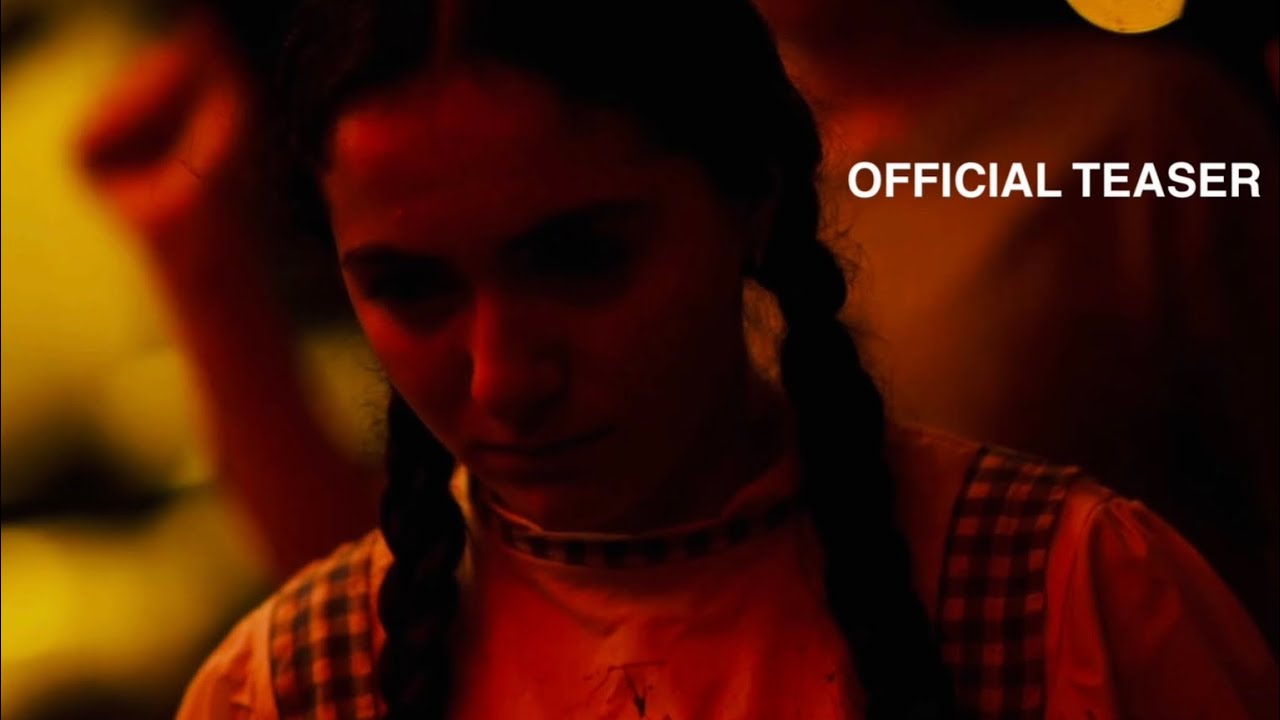
- 'Dorothy: The Haunting of Oz' Teaser Brings Wicked Witch Horror to Life
MoreHorrorMovies.com - The yellow brick road is taking a hard turn into nightmare territory. The first teaser for Dorothy: The Haunting of Oz has arrived, revealing a contemporary horror spin on L. Frank Baum’s The Wonderful Wizard of Oz that trades wonder for curses, trauma, and the Wicked Witch. Also, we're loving the teaser poster art! The indie feature is currently in post-production and is aiming for a fall 2026 premiere. Its first look teases a story where Oz is no longer a place of escape. It is something that breaks through. Watch the Teaser: The teaser reimagines Oz as a modern curse Dorothy: The Haunting of Oz begins on Halloween night, when a viral internet challenge unleashes Dorothy, the Wicked Witch, and other nightmarish figures on an unsuspecting California town. That gives the film a modern horror entry point. The curse spreads through a world shaped by phones, trends, and online dares, but the terror itself comes from something older and more mythic. The story follows a group of struggling college athletes as the line between myth and memory starts to collapse. At the center is one student who must face her trauma before it consumes everyone around her. Elijah J. Alvarez makes his feature debut The film marks the feature debut of writer-director Elijah J. Alvarez, who is 22 years old. Alvarez positions the project as horror built around identity, grief, and the monsters people carry with them. “Horror is a powerful way to explore not just defeating the monster, but learning how to live with it,” Alvarez says. “Dorothy: The Haunting of Oz is about grief-shaped identity, the ways evil enters through the fractures in our lives, and what happens when the thing haunting us is also the part of ourselves we refuse to face.” That quote gives the teaser’s darker Oz imagery a clear emotional focus. The film is not simply asking what would happen if the Wicked Witch became a slasher figure. It is asking what happens when a myth becomes a mirror. For a story rooted in The Wonderful Wizard of Oz, that is a fitting twist. Baum’s classic has always carried questions of fear, longing, courage, and the search for home. This version pushes those ideas into horror. The cast brings the nightmare to a college town The cast includes Adrienne Tabag, Caia Bonner, Jordan Sklansky, Aziah King, Andrew Wang, and Thomas Shan. The college-athlete angle gives the film a coming-of-age foundation. These characters are already under pressure before the supernatural threat arrives. Once the curse spreads, personal struggles and outside danger appear to feed into each other. The film also blends several genres. The project is described as mixing: Psychological thriller Supernatural slasher Coming-of-age drama Sci-fi worldbuilding A Gen Z horror take on myth and memory Alvarez also describes the film through the lens of his generation’s relationship with the internet and identity. “My generation is fractured by the internet and still trying to find ourselves while life keeps stripping pieces away,” Alvarez explains. “We document everything, we chase feeling, and still we can’t stop the darkness from encroaching.” Dorothy: The Haunting of Oz appears to use that digital-age fear to revive one of fantasy’s most famous worlds as a nightmare. The result could be a Gen Z horror film about what happens when old myths haunt new wounds. With the film aiming for fall 2026, the teaser is only the first step down this darker yellow brick road. The Wicked Witch is back, but this time, Oz looks far less magical and far more dangerous.